
Quick answer
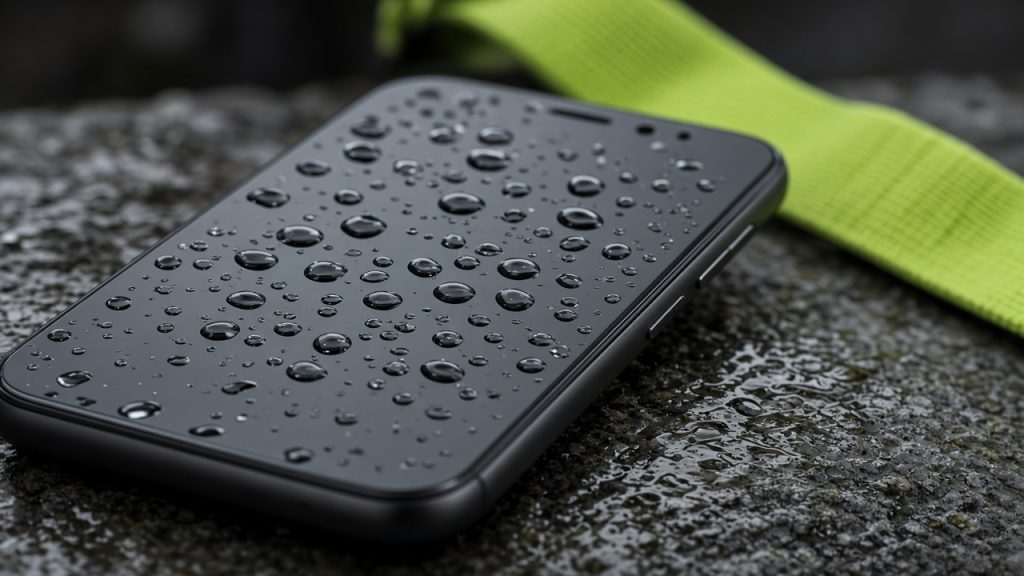
An IP rating (Ingress Protection) on a phone is a two-digit code for dust and water resistance — commonly IP67 or IP68. It is a lab snapshot under defined conditions, not a lifetime waterproof warranty for pools, beaches, or cracked seals.
You will see IP codes on flagship and many midrange phones, plus marketing words like “water resistant.” Phone ratings are usually stricter than the splash-focused IP codes on earbuds.
This explainer is based on how IP ratings are sold on smartphones. Gadget Clash does not run dunk tests. Confirm the rating, depth/time limits, and warranty exclusions on the exact SKU.
IP rating at a glance
| Question | Short answer |
|---|---|
| What it is | Lab code for dust + water resistance (e.g. IP68) |
| Common on phones | IP67 / IP68 — temporary immersion under stated limits |
| Care most if | Rain, kitchen spills, dusty jobs, clumsy pocket life |
| Ignore if | You baby the phone indoors and prioritize other specs |
| Related | Audio IP rating, MIL‑STD drop claims (separate) |
What an IP rating actually is
Format: IP + dust digit + water digit. Dust 6 means dust-tight under the test. Water 7 is short immersion; 8 is deeper/longer immersion as the maker defines (often “up to X meters for Y minutes” in fresh water). Manufacturers set IP68 depth claims — two IP68 phones are not automatically equal.
Ratings assume undamaged seals, factory ports/meshes, and usually fresh water — not soap, salt, sand abrasion, high-pressure jets, or steam. Liquid damage often sits outside warranty even when an IP code is advertised. After a drop that cracks glass or loosens a frame, treat the rating as compromised.
Why it shows up on product pages
- Flagship checklists: IP68 sits next to 5G and camera megapixels
- Peace-of-mind marketing: Rain and sink-splash confidence
- Comparison charts: IP54 midrange vs IP68 premium
- Fine print: Depth/time and “not for swimming” disclaimers
Buyer takeawayA real IP67/68 code beats vague “water resistant” ads. Still dry the ports before charging and do not plan pool photography around the badge.
Choose it if / Skip it if
Choose it if…
- You commute in rain, cook near sinks, or work in dusty environments
- Two similar phones differ mainly on IP54/none vs IP67/68
- You want clearer lab language than “splash proof” marketing
Skip it if…
- You always use a solid case and keep the phone away from liquids
- Camera, battery, or update policy should take the budget instead
- The phone you love is IP67 and you will never dunk it anyway
What you need for the rating to “work”
Factory seals intact — no cracked back glass, swollen battery, or missing screws
Ports and meshes clear; dry thoroughly before plugging in USB‑C
Respect manufacturer depth, time, and liquid-type limits
Optional: a case that does not trap grit against seals
Frequently asked questions
Can I swim with an IP68 phone?
Is IP68 always better than IP67?
Why did liquid damage void my warranty?
Do phone and earbud IP ratings mean the same thing?
Editorial note: Specs and support change by region and firmware. Confirm on the exact SKU before you buy. Part of the Gadget Clash Knowledge Base (Phones).
Back to Phones hub