
Quick answer
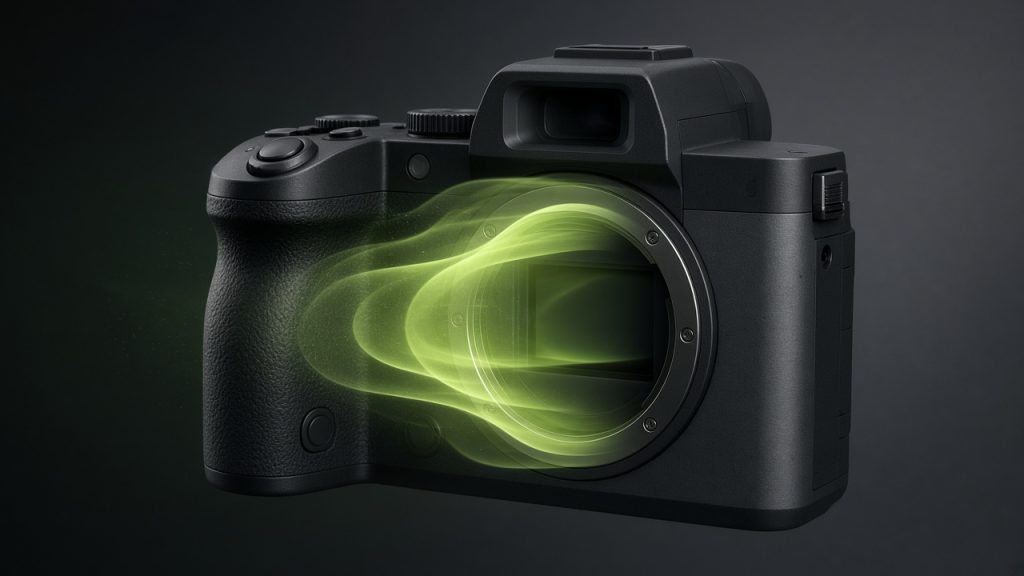
IBIS (in-body image stabilization) shifts the camera sensor to counteract handshake so stills and video stay sharper at slower shutter speeds. Phones and many action cams advertise the same job as OIS (optical, in the lens/module) or EIS (electronic, crop-based) — different hardware, same buyer promise: fewer blurry handheld shots.
You will see IBIS on mirrorless body specs (“5-axis IBIS”), OIS on phone telephoto modules, and EIS / HyperSmooth-style names on action cams. Stops of compensation (“6.5 stops”) are lab-style claims, not a guarantee for every focal length or walking video.
This explainer is based on how IBIS / OIS / EIS are marketed. Gadget Clash does not measure stabilization stops. Confirm real handheld samples for the exact SKU.
IBIS at a glance
| Question | Short answer |
|---|---|
| What it is | Sensor-shift stabilization inside the camera body |
| Helps most with | Handshake blur on stills; steadier handheld video |
| Care most if | Low light without a tripod, telephoto, vlogging, action video |
| Ignore if | You always use a tripod / gimbal, or only shoot bright daylight bursts |
| Related | OIS, EIS, shutter speed, ISO |
What IBIS actually is
IBIS moves the sensor on magnets/actuators to cancel small camera movements. It works with many lenses — including older glass that has no stabilizer — which is why mirrorless brands push it hard. OIS moves glass elements inside a lens or phone camera module; common on telephones’ tele lenses. EIS crops the sensor readout and re-frames digitally; action cams use aggressive EIS for “smooth” walk/ride footage, sometimes with a visible FOV hit.
Dual systems (IBIS + lens OIS, or OIS + EIS on phones) can cooperate. Stabilization fights camera shake. It does not freeze a sprinting subject — you still need enough shutter speed for motion. In very low light, IBIS/OIS lets you slow the shutter instead of slamming ISO, which is why it pairs with the exposure triangle on buyer checklists.
Why it shows up on product pages
- Mirrorless bodies: IBIS as a body-level upgrade even with kit lenses
- Phones: OIS on main/tele modules; cinematic / action modes that add EIS
- Action cams: Named EIS modes as the hero feature for helmets and bikes
- Lenses: “OS / VR / OSS” badges when the glass carries OIS
Buyer takeawayFor GC camera, phone, and action-cam shoppers, stabilization is one of the highest-leverage everyday features — more useful than chasing max ISO numbers.
Choose it if / Skip it if
Choose it if…
- You shoot handheld indoors, evenings, or long focal lengths
- You vlog or walk-and-talk without a gimbal
- You are picking an action cam mainly for smooth footage
Skip it if…
- Studio tripod work or flash photography is your default
- You already own a gimbal and only shoot bright run-and-gun video
- The “stabilized” mode crops too hard for the framing you need
IBIS vs OIS vs EIS
| Label | What shoppers should know |
|---|---|
| IBIS | In-body sensor shift — great with many lenses on mirrorless |
| OIS | Optical elements in the lens/module — common on phones & tele lenses |
| EIS | Electronic crop-based smooth — strong on action cams, can shrink FOV |
| Gimbal | External stabilizer for bigger moves; not the same as IBIS |
What you need for IBIS / stabilization to help
IBIS enabled on the body (and lens OIS coordinated if both exist)
Shutter speeds that are slow enough to benefit — but not so slow subjects smear
For EIS: accept some crop / mode limits (especially on action cams)
Updated firmware — stabilization tuning often improves after launch
Frequently asked questions
Does IBIS replace a gimbal?
Is phone OIS the same as camera IBIS?
Why are “stops” of IBIS not matching my results?
Can IBIS fix motion blur on moving subjects?
Editorial note: Specs and support change by region and firmware. Confirm on the exact SKU before you buy. Part of the Gadget Clash Knowledge Base (Cameras).
Back to Cameras hub