
Quick answer
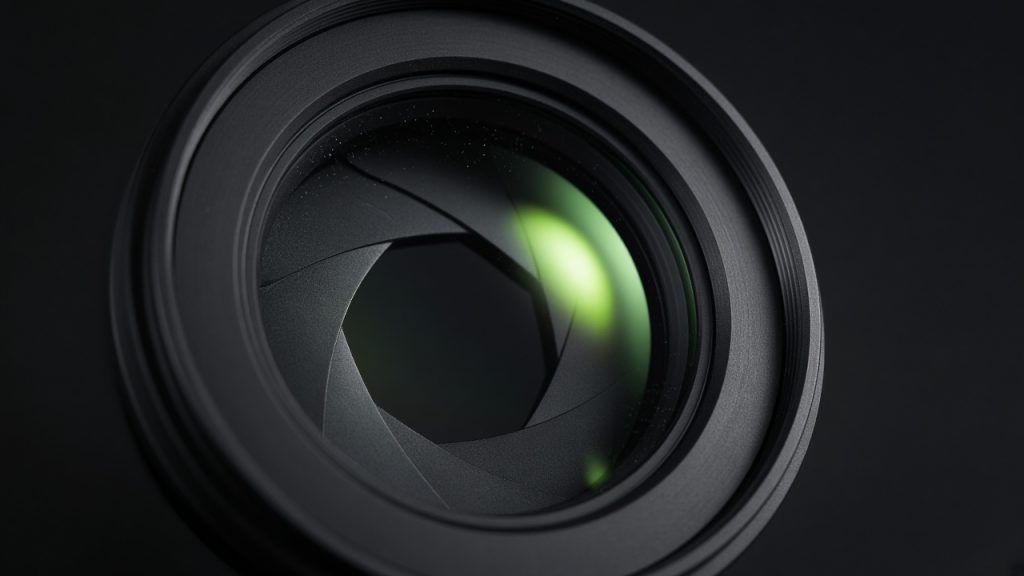
Aperture is the opening in a lens that lets light reach the sensor. It is written as an f-stop (f/1.8, f/2.8, f/5.6). A lower f-number means a wider opening — more light and usually more background blur — on phones, mirrorless kits, and action cams that advertise a “bright” lens.
You will see aperture on lens boxes, phone camera specs (“main camera f/1.6”), and zoom lenses that change f-stop as you zoom. Marketing loves the smallest f-number; that is rarely the whole story for every lens position.
This explainer is based on how aperture is marketed on cameras and phones. Gadget Clash does not lab-test lenses. Confirm the f-stop range on the exact SKU and focal length you will use.
Aperture at a glance
| Question | Short answer |
|---|---|
| What it is | Lens opening size, shown as f-stop (f/1.4, f/2.8…) |
| Lower f-number means | Wider opening → more light, shallower depth of field |
| Care most if | Low light, portraits with blur, or picking a “fast” lens |
| Ignore if | You shoot bright daylight or the phone’s night mode already covers you |
| Related | ISO, shutter speed, sensor size |
What aperture actually is
Think of the lens as a window. Aperture is how wide you open the blinds. Photographers write it as f/ plus a number. Confusing bit: f/1.8 is “wider” than f/4. Wider apertures gather more light in the same shutter time, so you can keep ISO lower or freeze motion with a faster shutter speed.
Wide apertures also shrink the sharp zone (shallow depth of field) — useful for portraits, less useful if you need a whole landscape sharp. On phones, computational processing often fakes or softens blur; the printed f-stop still matters for light gathering, but sample photos beat the number alone. Zoom lenses often get “slower” (higher f-number) as you zoom — the f/2.8 on the box may only apply at the wide end.
Why it shows up on product pages
- Phones: “f/1.5 main sensor” sells low-light confidence next to megapixels
- Lenses: “fast” primes (f/1.4–f/1.8) cost more and promise blur + night capability
- Kits and zooms: Variable apertures (f/3.5–5.6) keep weight and price down
- Action cams: Fixed bright apertures help in dim rides and indoor clips
Buyer takeawayA bright aperture helps, but sensor size, stabilization, and processing decide how the photo actually looks.
Choose it if / Skip it if
Choose it if…
- You mostly shoot daylight landscapes or well-lit video
- The “fast” lens is soft wide open and you would stop down anyway
- Budget should buy a better sensor, IBIS, or a usable zoom instead of one stop of brightness
What you need for a bright aperture to pay off
A lens/phone module that actually stays at that f-stop for the focal length you use
Enough focus accuracy (eyes/face AF) so shallow depth of field does not miss the subject
Realistic expectations on tiny phone sensors — blur and noise still depend on processing
Optional: IBIS / OIS so you are not forced into ultra-high ISO in dim light
Frequently asked questions
Is a lower f-number always better?
Why does my zoom say f/3.5–5.6?
Do phones with f/1.5 beat bigger cameras?
What about “aperture control” on phones?
Editorial note: Specs and support change by region and firmware. Confirm on the exact SKU before you buy. Part of the Gadget Clash Knowledge Base (Cameras).
Back to Cameras hub