
Quick answer
Zigbee is a long-running low-power wireless mesh standard used by many smart bulbs, sensors, plugs, and buttons. Devices usually talk through a Zigbee-capable hub (Philips Hue, SmartThings, Amazon Echo with Zigbee, and others) — not directly through your phone’s WiFi alone.
You will still see Zigbee on product pages next to newer Matter / Thread badges. ZWave is a separate mesh family (different radio, different accessory list) that shows up on locks and sensors in some regions — covered in the vs table below.
This explainer is based on how Zigbee and ZWave appear in consumer listings. Gadget Clash does not certify mesh interoperability. Confirm hub compatibility for the exact bulb or sensor SKU.
Zigbee at a glance
| Question | Short answer |
|---|---|
| What it is | Low-power mesh protocol; typically needs a Zigbee hub |
| Common on | Bulbs, motion sensors, plugs, remotes, some locks |
| Care most if | You already own a Zigbee hub / Hue-style ecosystem |
| Ignore if | You are starting Matter-first and have no Zigbee gear |
| Related | Z‑Wave, Thread, Matter, brand hubs |
What Zigbee actually is
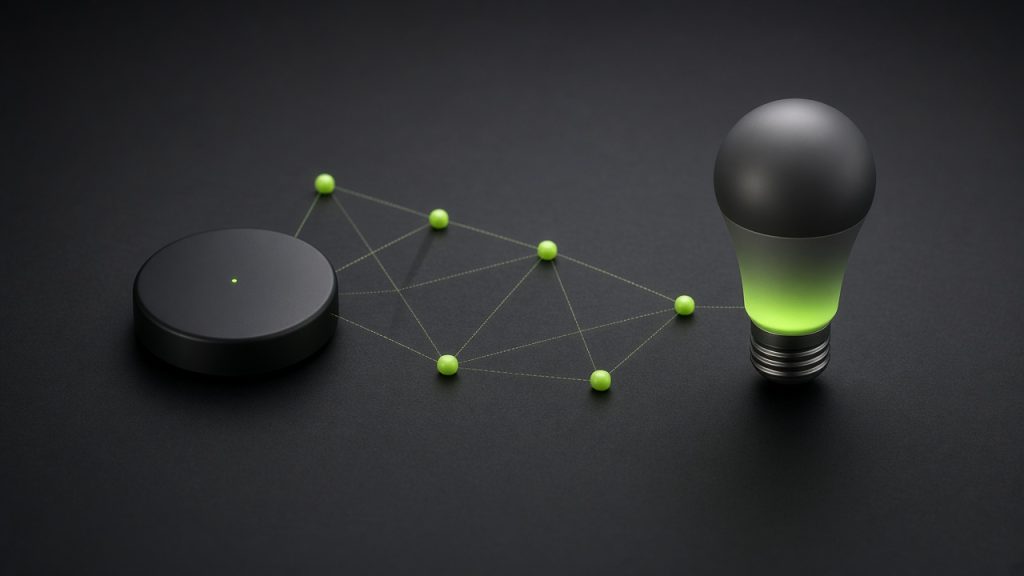
Zigbee creates a mesh of small devices so signals can hop via powered nodes (often bulbs or plugs) to reach farther rooms. Your phone app talks to a hub or bridge that speaks Zigbee on one side and Wi‑Fi/Ethernet on the other.
Not every Zigbee device joins every hub without drama — profiles, manufacturers, and works with lists still matter. Hue bulbs historically preferred the Hue bridge; many “generic” Zigbee sensors pair best with hubs that document that model. Newer products may offer Zigbee and Matter paths; read the box carefully.
Why it shows up on product pages
- Mature accessory catalogues: Years of bulbs and sensors still sell on Zigbee
- Hub ecosystems: Hue, SmartThings, Homey, Echo Zigbee, and others keep the badge alive
- Battery sensors: Low power vs always-on Wi‑Fi gadgets
- Vs Thread/Matter: Retailers list radio type so you know which hub bag to buy
Buyer takeawayZigbee is still fine gear just match accessory ↔ hub. Do not assume a Zigbee bulb pairs to every speaker on the shelf.
Choose it if / Skip it if
Choose it if…
- You already have a stable Zigbee hub and rooms of working lights/sensors
- A specific accessory is cheapest or best only in Zigbee form
- You want mesh sensors without adding another Wi‑Fi client per device
Skip it if…
- You are greenfield and prefer Matter + Thread for multi-ecosystem future
- You refuse to keep a dedicated hub powered
- The feature you need only exists on a WiFi / app-cloud SKU
Zigbee vs Z‑Wave vs Thread vs Matter
| Label | What shoppers should know |
|---|---|
| Zigbee | Common mesh for lights/sensors; hub-centric; huge existing fleets |
| Z‑Wave | Separate mesh (different frequency bands by region); strong in locks/security kits |
| Thread | Modern mesh often paired with Matter; border router instead of classic Zigbee bridge |
| Matter | Cross-app standard that may ride Thread/Wi‑Fi — not a drop-in Zigbee rename |
What you need for Zigbee to work
A Zigbee-compatible hub/bridge that lists your device (or a well-supported generic profile)
Zigbee accessories for that radio (not Wi‑Fi lookalikes with the same brand name)
Powered mesh helpers in larger homes (bulbs/plugs as routers)
App/account for that hub — and a plan if the vendor sunsets the bridge
Frequently asked questions
Is Zigbee the same as Z‑Wave?
Can Zigbee work with HomeKit or Alexa?
Should I replace Zigbee with Matter?
Do Zigbee devices need my WiFi password?
Editorial note: Specs and support change by region and firmware. Confirm on the exact SKU before you buy. Part of the Gadget Clash Knowledge Base (Smart home).
Back to Smart home hub