
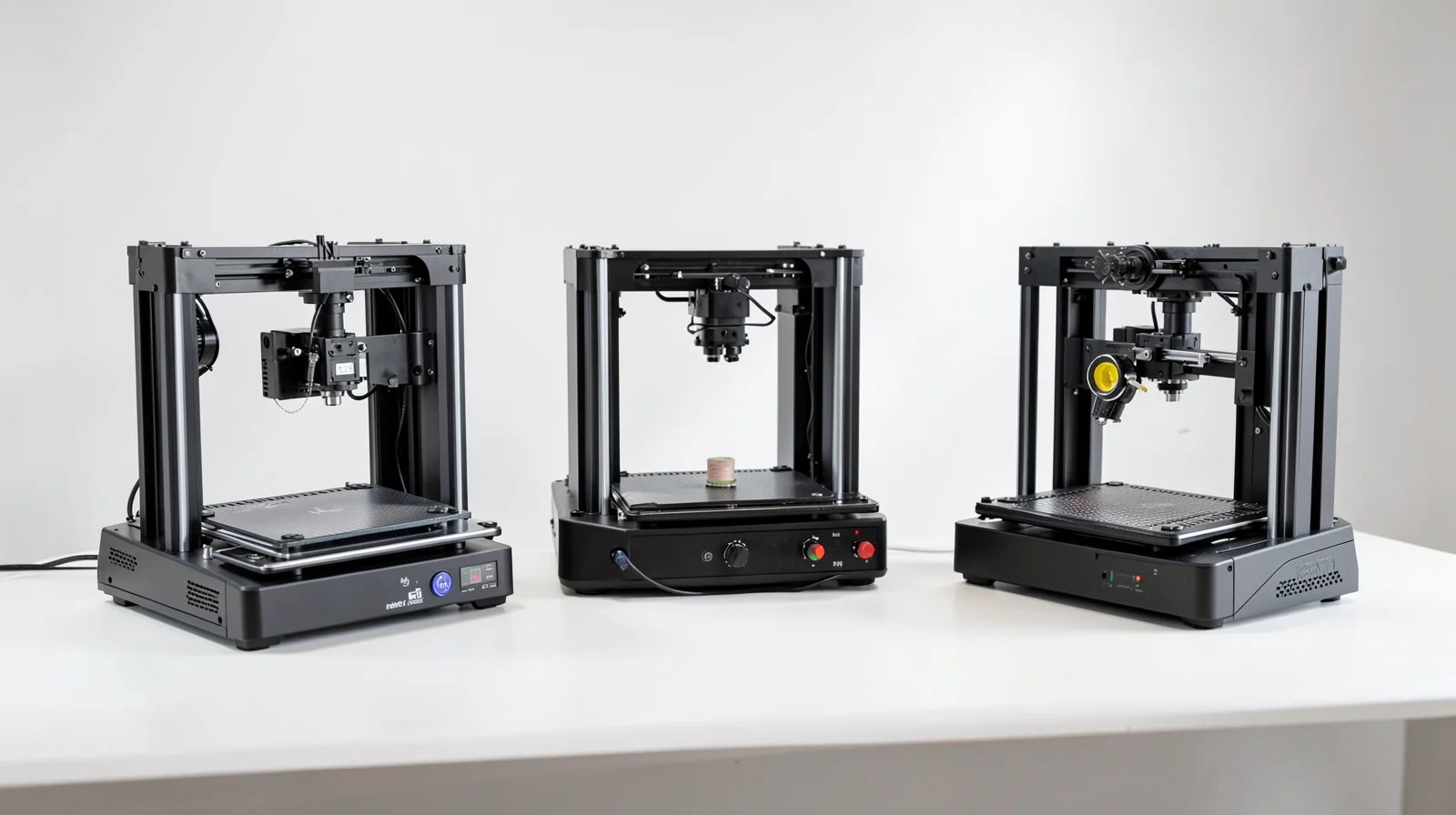
Buying your first 3D printer is much easier than it used to be. Automatic bed leveling, flexible PEI build plates and better slicer software mean you can spend more time making things and less time fixing failed first layers.
This guide is based on current manufacturer specifications and independent published reviews; Gadget Clash has not bench-tested these printers. The Bambu Lab A1 mini has the strongest independent consensus for first-time buyers. If you need a larger build area, the Creality Ender-3 V3 is the better fit.
Quick picks
- Best overall: Bambu Lab A1 mini
- Best larger build volume: Creality Ender-3 V3
- Best support-focused compact choice: Original Prusa MINI+
1. Bambu Lab A1 mini — Best overall beginner 3D printer
The Bambu Lab A1 mini is our starting point for most beginners because it removes many of the frustrating parts of early 3D printing. Its 180 × 180 × 180 mm build volume is not huge, but it is enough for miniatures, desk accessories, organisers, replacement parts and many hobby projects. It uses an all-metal hotend, a textured PEI plate and automated calibration features that make repeatable PLA printing much less intimidating.
The A1 mini supports PLA, PETG, TPU and PVA as ideal materials. Its 500 mm/s stated maximum toolhead speed sounds impressive, but the more useful benefit is that the whole workflow—from slicing in Bambu Studio to monitoring a print—is straightforward for someone learning the basics.
Buy it if: you want the least stressful route into 3D printing and do not need to make large objects.
Skip it if: you already know that you need a bigger build area or want to print engineering materials that benefit from an enclosure.
2. Creality Ender-3 V3 — Best for speed with a full-size build area
The Creality Ender-3 V3 is a more capable descendant of the enormously popular Ender line. Its 220 × 220 × 250 mm build volume is a practical all-round size, and its CoreXZ motion system is designed for much faster printing than older entry-level bed-slinger designs. Creality rates it up to 600 mm/s maximum, with automatic leveling, input shaping, Wi-Fi and a direct-drive extruder.
It supports common materials including PLA, PETG, ABS and TPU, although beginners should start with PLA. The Ender-3 V3 is a good choice if you want a larger printing platform without moving into a much more expensive enclosed printer category.
Buy it if: you want a versatile full-size printer and are happy to learn a little more about slicer settings and material choices.
Skip it if: your main goal is the most guided, appliance-like first-print experience.
3. Original Prusa MINI+ — Best compact choice for support and learning
The Original Prusa MINI+ has a smaller 180 × 180 × 180 mm build volume, but it remains a sensible first printer for buyers who care about support, documentation and long-term maintainability. It has mesh bed calibration, removable magnetic print sheets, replaceable nozzles and tested PrusaSlicer profiles.
It is not the obvious pick for buyers chasing the highest speed number. Its strength is a mature ecosystem and a clear path to understanding how your printer works instead of treating it as a black box.
Buy it if: great documentation, repairability and a proven ecosystem matter more than maximum build size.
Skip it if: you want the largest possible printer for the money.
What to look for in a first 3D printer
Automatic bed leveling
This is one of the best features to have as a beginner. It does not make every print perfect, but it cuts down on the manual adjustment that used to discourage new users.
A flexible PEI build plate
When a print finishes, you can flex the plate to remove it instead of prying aggressively at a fixed surface. It is a small quality-of-life feature that you will appreciate immediately.
Start with PLA
PLA is forgiving, widely available and a good choice for learning the basics. Move to PETG or TPU once you understand first layers, supports and slicer profiles. ABS and ASA need more care because they are more prone to warping and are better suited to a ventilated or enclosed setup.
Buy for build volume, not only speed
Fast print claims are useful, but build volume determines what you can make in one piece. Choose a compact 180 mm cube printer for desk projects and smaller parts; choose a 220–250 mm class printer if you expect to make bigger props or functional parts.
Our recommendation
For most people buying their first printer, choose the Bambu Lab A1 mini. It is the easiest route to successful PLA prints and a compact way to learn the hobby. Choose the Creality Ender-3 V3 instead if you know you will need a larger build area.
FAQ
Is a 3D printer hard to use for beginners?
Modern beginner printers are far easier to use than older DIY models. You still need to learn slicing, filament handling and basic maintenance, but automatic leveling and better software have removed much of the old setup friction.
Which filament should a beginner use?
Start with PLA. It is the simplest material to print, works well for decorative objects and many everyday parts, and does not usually require an enclosure.
What size 3D printer should I buy?
A 180 mm cube is enough for miniatures, organisers and small functional parts. Choose 220–250 mm if you want to make larger props, storage or household projects in one piece.
Editorial note: product availability and pricing change. Confirm current price, regional availability and included accessories before publishing affiliate links.